BMS-EV – Use Your EV Battery as Home Energy Storage and Reduce Your Electricity Bills
BMS-EV + EV battery vs Tesla Powerwall
✅ BMS-EV Controller + EV battery
~€4,590
(€590 controller + ~€4,000 used EV battery) = 50-80 kWh
❌ Tesla Powerwall 3
~€11,000
13.5 kWh (1 unit)
💰 58% cheaper + 4× more capacity
Electric vehicle batteries are the most rigorously tested cells on the market. They pass strict automotive safety tests – far more demanding than standard home energy storage systems.
With BMS-EV products, using this technology in your home is simple and enjoyable!

Monitor LCD 7″ Touch
Wireless WiFi transmission, built-in 6000mAh battery. Real-time battery status monitoring. Data history for at least 2 years.

BMS-EV Controller
The heart of the system – communication with inverter and EV battery. WiFi configuration, web interface, MQTT. Support for two identical batteries with one controller.
BMS-EV Cloud
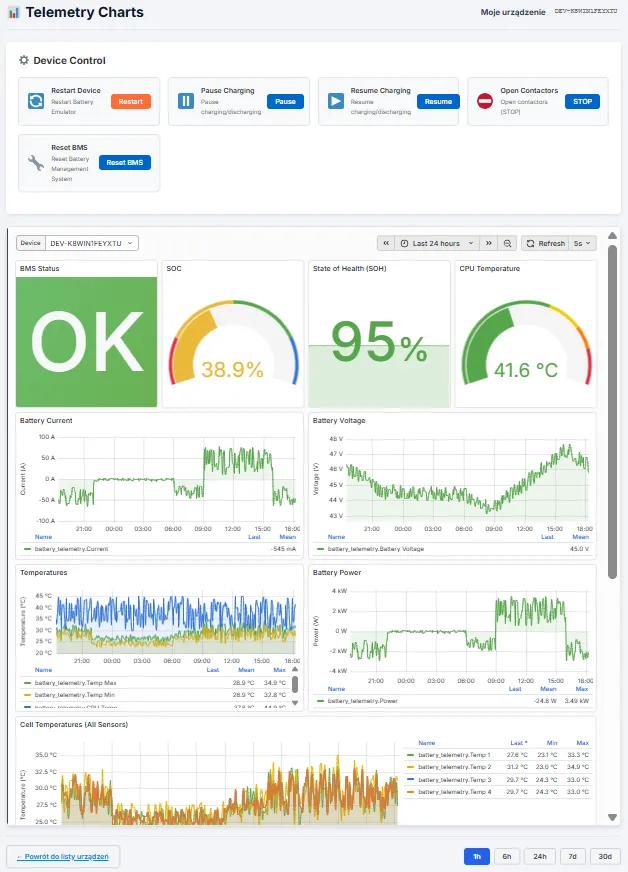
Remote battery monitoring from anywhere in the world. Real-time charts, data history, alarm notifications. Annual subscription.
Why Are EV Batteries Better?
🔋 Automotive-Grade Certified Cells
EV batteries pass tests according to UN 38.3, UL 1973 and IEC 62933 standards – the most rigorous safety standards for lithium-ion cells. Typical home storage doesn’t have to meet such strict requirements.💰 30-70% Savings Compared to New Storage
EV batteries retain 70-80% capacity after their service in the car. With 60-100 kWh capacity, they can power an average home for a whole week! The cost of such a solution is a fraction of the price of new energy storage.🌱 Ecology and Second Life for Batteries
Instead of disposal – utilization. You extend the battery life by another 10-15 years, reduce your carbon footprint and support the circular economy. New EU regulations (2023/1542) require 70% recycling of lithium batteries by 2030.⚡ 5-8x Less Stressed Than in a Car
At home, the battery operates in much gentler conditions – no sudden accelerations, extreme temperatures and continuous fast charging. This means longer life and stable operation.How Does It Work?
☀️ PV → Inverter → Home – solar energy powers your home ⚡ Inverter → BMS-EV – surplus goes to storage 🔋 BMS-EV ⇆ EV Battery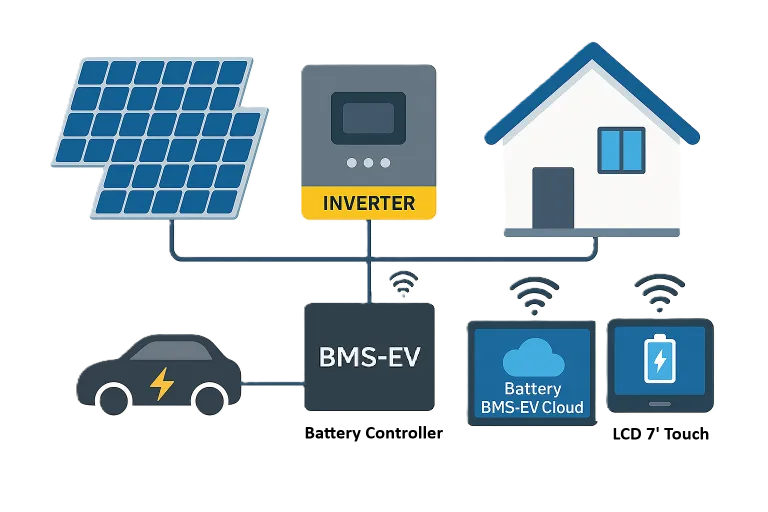
Compatibility
BMS-EV works with batteries from the most popular electric vehicles:- Nissan Leaf (24-62 kWh)
- Tesla Model S/3/X/Y
- BMW i3
- Volkswagen ID.3/ID.4
- Hyundai Ioniq/Kona
- and many others…
Safety First
⚠️ Working with high voltage is dangerous – that’s why BMS-EV has multi-layer protection systems:- Continuous voltage monitoring of each cell
- Temperature control with automatic shutdown
- Insulation resistance analysis and leakage protection
- FAULT mode – immediate stop when anomaly detected
- Compliance with UL 1974 and IEC 62933-5-3 standards
Net-Billing and Savings
With net-billing, energy fed to the grid is settled cheaply, while purchased energy is expensive. BMS-EV stores surplus in the EV battery and allows you to use it in the evening when solar energy is no longer available.- Self-consumption up to 90%+ instead of 30%
- Return on investment in 3-5 years
- Grid independence during outages
Why BMS-EV?
✅ Compatible with many inverters and EV batteries
✅ Advanced BMS with monitoring of each cell
✅ Home Assistant integration (MQTT, autodiscovery)
✅ WiFi monitoring, web panel and 7″ screen
✅ Plug & play – no programming required
✅ Technical support and documentation
✅ Advanced BMS with monitoring of each cell
✅ Home Assistant integration (MQTT, autodiscovery)
✅ WiFi monitoring, web panel and 7″ screen
✅ Plug & play – no programming required
✅ Technical support and documentation
For Whom?
🏠 Homeowners with photovoltaics
🔧 PV and RES installers
🚗 Electric vehicle owners
⚡ Off-grid and renewable energy enthusiasts
👉 Order now and start saving!
🔧 PV and RES installers
🚗 Electric vehicle owners
⚡ Off-grid and renewable energy enthusiasts